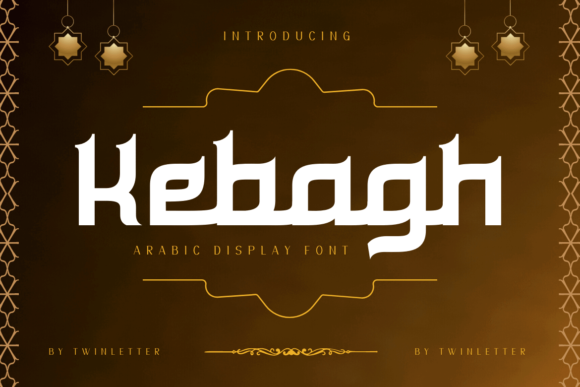
Kebagh Arabic Display Font for Handmade Creators
There I was—midnight oil burning, candle wax smudged on my sketchbook, staring at a half-finished label for my new amber-vanilla soy candle. The scent was warm, the packaging minimalist linen, but something felt off: the font lacked soul. Not too ornate, not too plain—just right. So I reached for Kebagh, an Arabic display font with both regular and bound styles, and watched how it transformed that little 2" x 3" label from “nice” to “unforgettable.”
Kebagh for Wedding Invitations and Elegant Branding
Kebagh shines brightest where intention meets elegance—like wedding stationery that whispers tradition while feeling utterly contemporary. I tested the bound style on a digital mockup of a foil-stamped invitation suite: the fluid connections between letters gave names like “Layla & Samir” a graceful, hand-crafted rhythm. Unlike many Arabic fonts that prioritize technical precision over warmth, Kebagh feels alive—slightly calligraphic, yet crisp enough for laser printing or high-res PDF delivery. It’s not built for long paragraphs (this is a display font, after all), but for titles, monograms, and ceremonial phrases? Absolutely. Pair it with a clean sans serif like Montserrat or Poppins for body text—and your printable wedding suite gains instant hierarchy and cultural resonance.
Kebagh for Boutique Packaging and Product Labels
When I printed Kebagh onto kraft paper labels for my small-batch baklava jars, the regular style held up beautifully—even at 14pt. The letterforms are generous, with open counters and balanced spacing, so ink doesn’t bleed on uncoated stock. More importantly, Kebagh reads as *intentional*, not generic—a subtle signal of care that customers notice before they even taste the pistachios. For boutique tags, soap wraps, or tea box sleeves, this display font adds quiet luxury without shouting. Just be mindful: avoid using the bound style below 18pt on physical labels—it’s meant for impact, not density. And yes—it’s fully compatible with Cricut Design Space and Silhouette Studio when exported as OTF or TTF, so SVG cutters can confidently use it for foil-pressed tags or embossed packaging accents.
Kebagh for Printable Wall Art and Digital Downloads
I designed a set of Arabic-inspired printable wall quotes—“Sabr,” “Noor,” “Barakah”—and used Kebagh in its regular weight over soft watercolor textures. Instant magic. Because Kebagh is a true display font, it scales gorgeously from social media previews (Instagram carousels, Pinterest pins) to 24"x36" prints. Its gentle contrast and rhythmic flow make each word feel like a small piece of art—not just text. For creators selling digital downloads on Etsy or Gumroad, Kebagh elevates perceived value instantly. Bonus: the font includes basic Arabic language support (including common ligatures and contextual alternates), so phrases render authentically—not as disconnected glyphs. Always double-check licensing before bundling Kebagh into editable Canva templates or commercial SVG bundles; the standard license covers most small-business use, but extended rights may be needed for resaleable design assets.
Kebagh for Tote Bags, Mugs, and Merchandise Design
Here’s the real test: I screen-printed “Yalla” in Kebagh’s bound style across a natural cotton tote. No registration issues. No awkward gaps. Just confident, connected lettering that looked hand-drawn—but consistent, reproducible, and scalable. That’s the power of a well-designed Arabic display font: it carries personality without sacrificing production practicality. On mugs? Use the regular weight at 28–36pt for ceramic decals—it stays legible even with slight glaze variation. For t-shirts or enamel pins? Stick to short words or initials—the bound style sings best in two-to-four character bursts (“Alif,” “Huda,” “Zahra”). Avoid cramming full sentences or fine print; Kebagh isn’t a workhorse text font, and trying to force it there dulls its charm. Think of it like gold foil: precious, purposeful, and always intentional.
Kebagh for Magazine Covers and Seasonal Craft Projects
Last Ramadan, I mocked up a mini zine cover titled “Qamar Nights”—using Kebagh for the title over a deep indigo background. The way the bound style curved around the crescent moon illustration? Chef’s kiss. This is where Kebagh proves itself beyond craft labels and into editorial territory: it has presence, gravitas, and visual harmony. For seasonal projects—Eid cards, Diwali packaging, Nowruz gift tags—Kebagh bridges heritage and modern minimalism. It works especially well alongside muted palettes, natural textures, and subtle metallic accents. As a display font, it invites pause. It asks to be read slowly. And in a world of scroll-and-skip, that’s rare. Just remember: if you’re layering Kebagh over photos or busy patterns, boost contrast with a thin white stroke or subtle drop shadow—its beauty deserves clarity.